When Ancient Voices Meet Modern Souls
There's something profoundly moving about hearing your ancestors' voices echoing through centuries, transformed yet unmistakably familiar. On December 4th, 2025, the Naghash Ensemble of Armenia will perform at Namur Concert Hall, bringing with them a musical journey that bridges the medieval Armenian monastery and the contemporary concert stage.
The ensemble's unique sound has been described by renowned Armenian composer Tigran Mansurian as "the sounds of Ancient Armenia reimagined for the 21st century." This isn't just praise from any musician – Mansurian, now in his eighties, is considered one of Armenia's most important living composers, whose works have been performed by orchestras worldwide.
The Sacred Texts That Inspire
At the heart of this evening's performance lies the mystical poetry of Mkrtich Naghash, a medieval Armenian priest and poet whose spiritual writings have resonated across centuries. Naghash, who lived in the 14th century, was known for his deeply personal relationship with the divine, often writing about the soul's journey toward God through suffering and exile.
Armenian-American composer John Hodian has taken these sacred texts and woven them into "Songs of Exile," a work that the Armenisch-Deutsche Korrespondenz described as "part folk music, part classical, and profoundly moving. Unmistakably Armenian, but out of this world."
Hodian, who studied at Yale and has spent years researching Armenian musical traditions, didn't simply set ancient words to modern melodies. Instead, he created what he calls "a meditation on man's relationship to God from the perspective of a monk forced to live in exile for many years." The parallels to the Armenian experience – both historical and contemporary – are impossible to ignore.
Three Voices, One Spirit
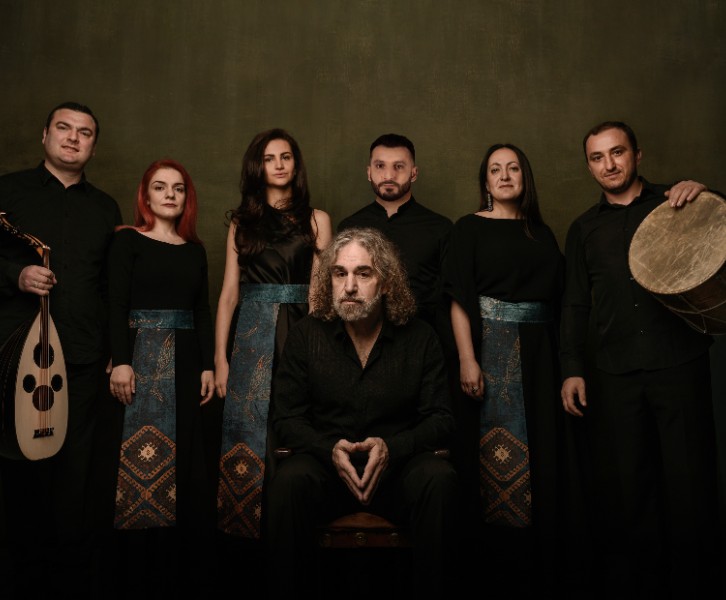
The ensemble features three remarkable female vocalists whose voices interweave like threads in an ancient tapestry. Their harmonies carry the weight of centuries, yet feel startlingly contemporary. These aren't museum pieces being dusted off for academic interest – this is living, breathing music that speaks to modern audiences while honoring its roots.
Supporting the vocalists are some of Armenia's finest instrumentalists, each a master of their craft. The duduk, that haunting double-reed instrument that UNESCO has recognized as a Masterpiece of Intangible Heritage, provides the ensemble's emotional backbone. Its mournful yet hopeful voice has soundtracked countless Armenian stories of loss and resilience.
The oud adds Middle Eastern textures that remind us of Armenia's position at the crossroads of civilizations, while the dhol – the traditional Armenian drum – provides rhythmic foundations that can shift from meditative whispers to driving, almost rock-like intensity. A piano weaves through it all, sometimes classical in its approach, sometimes jazz-influenced, always serving the greater musical narrative.
Beyond Traditional Boundaries
What makes the Naghash Ensemble particularly compelling is their refusal to be confined by genre expectations. This isn't "world music" in the sanitized, tourist-friendly sense. Nor is it academic early music reconstruction. Instead, it's something more honest and more challenging – a genuine fusion that respects its sources while fearlessly exploring new territories.
The ensemble combines what they call "the earthy spirituality of Armenian folk song" with new classical music and contemporary post-minimalism, all energized by elements borrowed from rock and jazz. It sounds like it shouldn't work, but somehow it does – brilliantly.
This approach reflects a broader trend among Armenian artists worldwide who are finding ways to honor their heritage while speaking to contemporary audiences. From Serj Tankian's classical compositions to the avant-garde experiments of musicians like Armen Ra, Armenian artists are proving that tradition and innovation aren't opposites – they're dance partners.
The Namur Experience
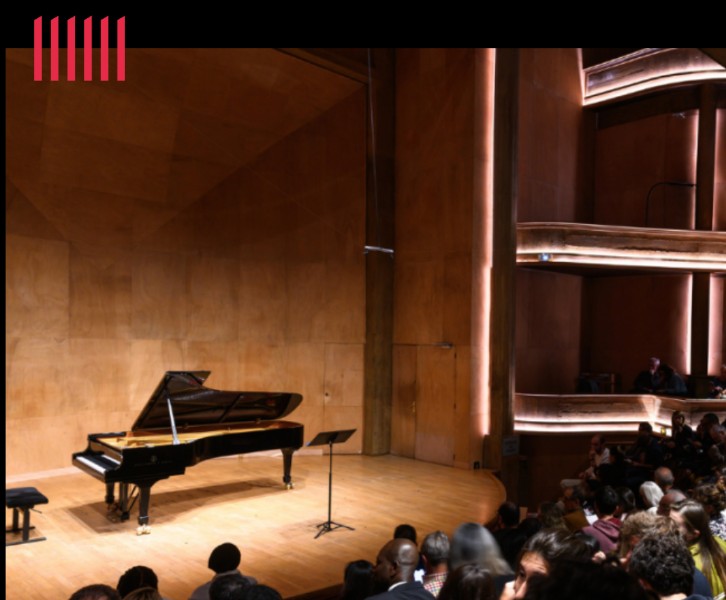
Namur Concert Hall, located at Rue Rogier 82, provides an intimate setting for this transcendent music. The venue's acoustics are particularly well-suited to chamber ensembles, allowing every nuance of the duduk's voice and every whispered vocal harmony to reach the audience with clarity and warmth.
For the Armenian community in Belgium and beyond, this concert represents more than entertainment – it's a homecoming of sorts. In a world where Armenian culture often feels fragmented across diaspora communities, events like this create moments of unity and recognition. You don't need to understand every word of Naghash's medieval Armenian to feel the spiritual weight of his poetry, especially as filtered through Hodian's sensitive contemporary settings.
The performance begins at 7:00 PM, and tickets are available through the venue's website. Given the ensemble's growing international reputation and the intimate size of the venue, early booking is strongly recommended.
This isn't just a concert – it's a pilgrimage through sound, a journey from medieval monasteries to modern concert halls, guided by voices that understand both the weight of tradition and the necessity of evolution. In our fractured times, there's something deeply healing about music that speaks to both ancient wisdom and contemporary yearning.
Whether you're deeply connected to Armenian culture or simply curious about music that transcends easy categorization, the Naghash Ensemble offers an experience that will linger long after the final notes fade into the Namur evening.